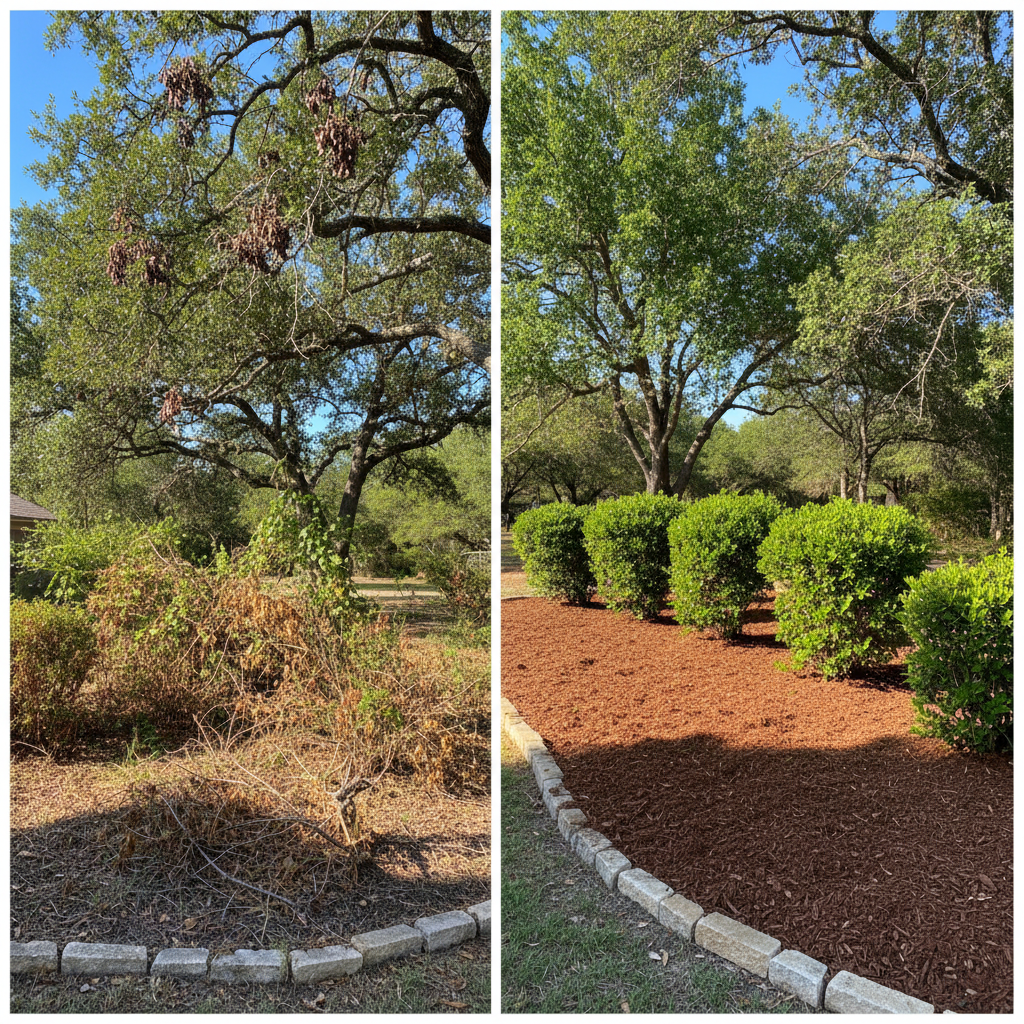
You’ve got shrubs and bushes around your house, right? Pretty much everyone does. And eventually, you've got to trim them. Most folks do this one of two ways: shearing or selective pruning. Both methods get the job done, sure, but they work differently, and the results? They’re pretty distinct. Let’s break down what each means for your plants and, honestly, for your wallet.
Shearing: The Quick & Uniform Look
Shearing is probably what pops into most people’s heads when they think about trimming hedges. It’s that super uniform, often geometric look you see on a lot of foundation plantings or formal hedges. You grab a power hedge trimmer—or even hand shears if you’ve got the patience of a saint—and just cut everything back to a specific shape. Think crisp straight lines, perfectly rounded tops, or neat squares.
Cost & Time:
This is usually the faster, and therefore cheaper, choice if you’re paying someone to do it. It just takes less skill and less time to buzz everything down. If you’re tackling it yourself, shearing is definitely quicker than selective pruning.
Appearance:
You end up with a very neat, tidy, and formal look. It’s consistent. The downside, though, is that you often chop off all the flowers, and the plant can end up looking a bit unnatural, kind of like a green box. You’re really only seeing the outermost layer of leaves.
Plant Health & Durability:
This is where shearing can actually cause some real headaches, especially over time. When you constantly shear, you’re only ever cutting the outer growth. This pushes the plant to grow super dense on the outside, which then shades out the inner parts. Eventually, you get a thick, leafy shell with a bare, woody interior. This makes the plant less able to fight off pests and diseases because air can’t get through. Plus, in our scorching Hondo summers, that dense outer layer can trap heat and really stress the plant, especially if it’s a variety that likes more airflow.
Maintenance:
You’ll be doing this more often. Since you’re basically telling the plant to grow on the outside, those new shoots will pop out quickly, and your nice, neat shape will start looking shaggy sooner than you’d like. You might find yourself trimming these every few weeks during the growing season.
Selective Pruning: The Natural & Healthy Approach
Selective pruning, sometimes called hand pruning or thinning, is a more thoughtful process. Instead of just cutting everything to a shape, you actually look at each branch and decide what needs to go. You’re removing dead, diseased, or crossing branches, and thinning out dense spots to help air move better and let light in. You’re also cutting back to a bud or a main branch, which encourages healthier growth overall.
Cost & Time:
This takes more time and, frankly, more skill. If you’re bringing in a pro like Neighborly Tree, it’s going to cost more because it’s a more labor-intensive and specialized job. If you’re doing it yourself, prepare to spend a good bit longer out there with your hand pruners and loppers.
Appearance:
The result? A more natural, open, and often much more beautiful plant. You’ll actually see the plant’s natural form, and it tends to encourage more flowering and fruiting. It looks less like a green blob and more like a healthy, vibrant shrub.
Plant Health & Durability:
This is where selective pruning really shines. By taking out problematic branches and opening up the plant, you get better air circulation and more light. This cuts down on the risk of fungal diseases and bug infestations. It also encourages stronger, more vigorous growth from the inside out, making the plant much tougher and longer-lived. This is super important for plants around here, like Texas Sage or many kinds of hollies, that really thrive with good airflow.
Maintenance:
You won’t have to do it as often. Because you’re making more significant cuts that promote healthy growth, the plant holds its shape better and doesn’t produce as much quick, bushy outer growth that needs constant trimming. You might only need to do this once or twice a year, depending on the plant.
So, What Should You Do?
For most homeowners right here in Hondo, I’m going to recommend selective pruning for the majority of your shrubs and bushes. Especially for flowering plants or anything you want to look natural and healthy.
Here’s why:
- It’s better for the long-term health of your plants. They’ll live longer, look better, and be more resistant to the stresses of our climate.
- You get more flowers and a more natural, attractive shape.
- Even though it might cost a bit more upfront if you hire it out, or take more time if you DIY, you’ll do it less often. That means less work for you in the long run.
Now, there are exceptions. If you have a very formal hedge that you absolutely want to keep as a perfect green wall, then shearing might be the way to go. But even then, I’d suggest doing a hard selective prune every few years to rejuvenate the plant and keep it from becoming a hollow shell.
At Neighborly Tree, we always lean towards what’s best for the plant's health and your yard's overall beauty. If you’re not sure which approach is right for your specific shrubs, or if you just want a hand getting them shaped up the right way, give us a call. We’re happy to take a look and give you an honest opinion.